
Health and Safety Protection at Work with Lead Foil
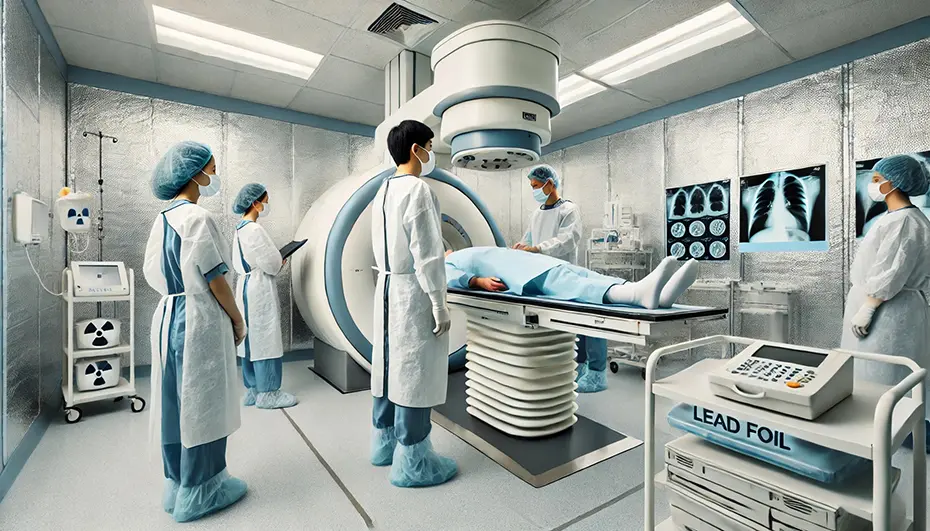
Employee safety and health protection are top priorities in many industries, especially in environments where there is a risk of exposure to ionizing radiation. In workplaces such as hospitals, laboratories, industrial plants, and nuclear power stations, lead foil plays a crucial role in shielding against the harmful effects of radiation. Due to its unique properties, lead foil effectively blocks X-rays and gamma rays, ensuring the safety of both personnel and equipment.
In this article, we will explore how lead foil contributes to health and safety protection in the workplace, examine its applications across various industries, and highlight its importance in modern radiological protection systems.
Why is radiation protection so important?
Ionizing radiation, such as X-rays and gamma rays, can pose serious health risks, including tissue damage, increased cancer risk, and DNA mutations. Individuals who regularly work in environments exposed to radiation, such as hospitals, research laboratories, and nuclear power plants, are particularly vulnerable to prolonged exposure.
Radiation protection is essential to prevent these harmful health effects. Lead foil is one of the most effective materials for blocking radiation, playing a key role in ensuring the health and safety of workers.
Protective properties of lead foil
Lead foil is a unique material with high density, which makes it highly effective in blocking ionizing radiation. Lead, the primary component of lead foil, has excellent radiation absorption properties. Even a thin layer of lead foil can effectively block radiation, making it widely used in areas requiring high levels of protection.
Key Properties of Lead Foil:
- High density – Lead effectively blocks radiation, making lead foil an ideal protective material.
- Flexibility – Lead foil can be easily shaped and adapted to various surfaces, allowing for versatile applications.
- Resistance to external factors – Lead foil is resistant to moisture and chemical exposure, ensuring long-lasting protection.
- Ease of installation – Lead foil can be installed on a wide range of surfaces, including walls, doors, and shields.
Applications of lead foil in the workplace
1. Radiological Protection in Hospitals and Clinics
Hospitals and medical facilities are key environments where lead foil plays a vital role. X-ray radiation is widely used in diagnostic imaging, but excessive exposure can be harmful to the health of both patients and staff. Lead foil is used as a protective material in the walls, ceilings, doors, and screens of X-ray, CT, and radiotherapy rooms.
Applications of Lead Foil in Hospitals:
- X-ray Room Walls – Lead foil installed on the walls effectively prevents radiation from spreading to adjacent rooms.
- Protective Doors – Doors made with lead foil shield personnel and patients from radiation during diagnostic procedures.
- Mobile Screens – Lead foil mobile screens serve as portable barriers that can be easily moved and adjusted as needed for radiation protection.
2. Radiological Protection in Research Laboratories
In research laboratories where radioactive materials are handled, radiation protection is critical. Lead foil is an essential protective element in environments where radioactive substances, isotopes, and chemical or biological materials are used.
Applications of Lead Foil in Laboratories:
- Laboratory Table Shields – Lead foil can be applied to workbenches, protecting against radiation during the handling of radioactive materials.
- Protective Chambers – Lead foil is used in the construction of protective chambers that prevent radiation from escaping.
- Protective Screens – Lead foil is used in shielding screens that protect personnel during experiments involving radiation.
3. Protection in Industrial Facilities
In industries such as energy production, chemical manufacturing, and nuclear energy, lead foil plays a crucial role in protecting the health and safety of workers. Industrial equipment that emits ionizing radiation requires solid protective systems
Applications of Lead Foil in Industry:
- Machine Insulation – Lead foil is used to shield industrial machines emitting radiation, protecting personnel from its effects.
- Protective Chambers – Lead foil is used in protective chambers housing radiation-emitting devices, ensuring safe working conditions.
- Tank Shields – Lead foil is applied as shielding around tanks storing radioactive materials, providing additional protection.
4. Protection in Nuclear Power Plants
In nuclear power plants, where high levels of radiation are present, lead foil is one of the key protective materials. Its ability to block ionizing radiation makes it indispensable for ensuring safe working conditions for nuclear plant employees and protecting the surrounding environment from radiation’s harmful effects.
Applications of Lead Foil in Nuclear Power Plants:
- Reactor Shielding – Lead foil is used to shield nuclear reactors, protecting staff from radiation.
- Cooling System Protection – Lead foil is applied to protect cooling systems exposed to radiation.
- Cable and Installation Insulation – Lead foil can be used to insulate cables and installations that need to be protected from radiation exposure.
How does lead foil support workplace safety?
In addition to providing protection from radiation, lead foil also plays a key role in shielding against other workplace hazards. Thanks to its insulating properties, lead foil can be used for protection against noise and moisture, which helps improve both the comfort and safety of workers.
Noise protection
Due to its high density, lead foil is excellent at soundproofing. It can be used as an insulating material in areas where noise levels are high, such as production halls, machinery rooms, and industrial plants. Acoustic insulation with lead foil helps reduce worker stress and fatigue, directly benefiting their health and work efficiency.
Moisture protection
Lead foil also acts as an effective moisture barrier. In places where moisture poses a threat to building structures or machinery, lead foil can be used as a protective layer, preventing moisture penetration and ensuring long-term protection. This is especially important in environments where moisture can lead to machine corrosion or the weakening of building structures.
Sustainable solutions with lead foil
Lead foil not only provides effective workplace protection but also aligns with sustainable practices. Lead is a fully recyclable material, making lead foil environmentally friendly. With increasing emphasis on eco-friendly approaches across various industries, the ability to recycle lead foil is an added benefit.
Conclusion
Lead foil plays a crucial role in ensuring health and safety in many industries, including medicine, industry, and energy. Its unique properties—such as high density, flexibility, and resistance to external factors—make it an indispensable material in radiological protection systems and in areas exposed to noise and moisture. Lead foil not only provides reliable protection but also contributes to sustainable development due to its recyclability.
As technology advances and workplace safety requirements increase, lead foil remains one of the most important protective materials in modern health and safety systems.


