
Lead foil in acoustic insulation and moisture protection
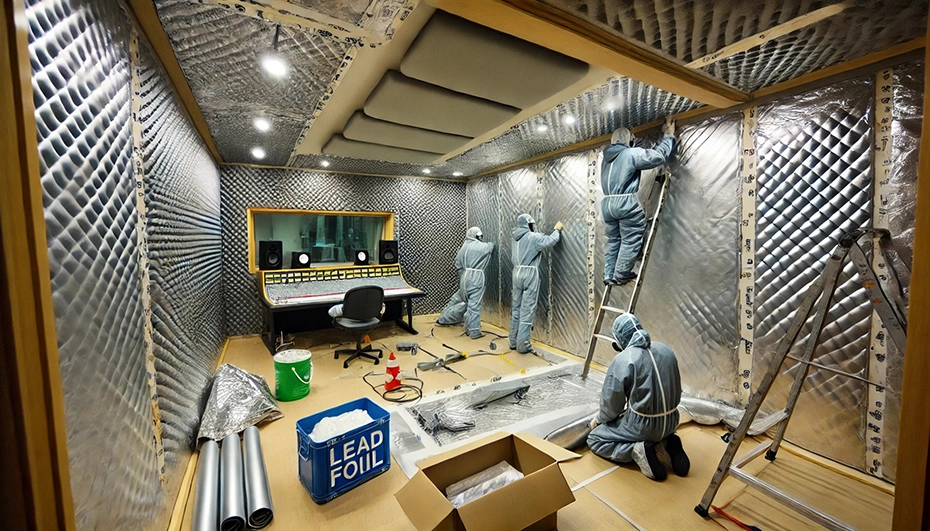
Modern construction is constantly evolving, seeking more efficient and eco-friendly solutions. Investors, architects, and contractors are increasingly focused on sustainability, energy efficiency, acoustic comfort, and moisture protection. Thanks to its unique properties, lead foil is widely used as an effective material for acoustic insulation and moisture protection, while also meeting the requirements of sustainable building practices.
Properties of lead foils and sustainable development
Lead foils combine many features that perfectly meet the needs of modern construction. Thanks to their physical properties, such as high density, flexibility, and resistance to external factors, lead foil is widely used in various branches of construction. More importantly, lead is a recyclable material, making it an environmentally friendly solution. In an era focused on eco-friendly building, lead foil stands out as a material that can be easily processed and reused.
Application of lead foil in acoustic insulation
Noise is one of the biggest challenges in modern construction. In urban areas, where traffic and industrial activity are high, acoustic comfort inside buildings becomes essential for the health and well-being of residents. In places like hotels, office buildings, schools, and hospitals, where peace and quiet are necessary, the use of lead foil becomes indispensable.
Acoustic properties of lead
Due to its high density, lead is excellent at soundproofing. Compared to other insulation materials such as mineral wool or gypsum boards, lead foil offers significantly better sound-dampening performance. In practice, this means it can be used in both residential and commercial buildings to prevent noise from entering the building and, conversely, to prevent sound from escaping the interior.
Thanks to its flexibility, lead foil can be easily installed on a variety of surfaces—both walls and ceilings—as well as used as a filler in partitions. It is an ideal material for use in places such as:
- Recording studios – ensuring excellent sound insulation by preventing outside noise and providing the best recording quality.
- Hotels and apartments – minimizing external noise, ensuring comfort and peace for guests.
- Offices – enabling the creation of spaces with better working conditions by eliminating noise from other rooms.
- Conference and lecture rooms – helping create an environment conducive to presentations and focus.
Practical applications
The use of lead foil in acoustic insulation is not limited to large construction projects. Homeowners can also benefit from its properties by installing lead foil in walls or ceilings to ensure peace and quiet, even in noisy surroundings. The foil is often used in modern, multifunctional projects such as shopping centers, where acoustic insulation plays a key role in providing comfort for users.
Lead foil as moisture protection
Moisture protection is another key aspect of modern construction. Moisture can lead to structural damage, mold growth, and reduced energy efficiency in buildings. Lead foil, due to its impermeability and corrosion resistance, provides an excellent solution as a moisture barrier.
Lead foil properties for moisture protection
Lead not only shields against radiation but also prevents moisture penetration. This is particularly important in construction, where building elements are exposed to external factors such as rain and ground moisture. Lead foil acts as a barrier, preventing water from entering the building and protecting the structure from damage.
Lead foil can be used as a protective layer in roofs, foundations, and walls. It is widely applied in construction projects where moisture protection is critical, including:
- Foundations – Lead foil provides an excellent barrier, protecting building foundations from ground moisture.
- Roofs – Used as a waterproof membrane, it protects the roof from leaks and damage caused by rain.
- Exterior walls – Lead foil can be installed in building facades, preventing moisture from penetrating the interior.
Longevity and durability
One of the key advantages of using lead foil for moisture protection is its durability. Lead does not corrode when exposed to moisture, making lead foil exceptionally long-lasting compared to other waterproofing materials. As a result, buildings that use lead foil require less maintenance and repairs, translating into lower operating costs over time.
Sustainable construction and lead foil
Sustainable construction is becoming an increasingly prevalent trend in the building industry. The key goal is to create structures that are environmentally friendly, energy-efficient, and long-lasting. Lead foil fits into this trend as a material that not only offers exceptional functionality but can also be fully recycled. Lead is a metal that, after its lifespan, can be easily processed and reused, minimizing its environmental impact.
Energy efficiency and lead foil
Acoustic insulation and moisture protection directly impact the energy efficiency of buildings. Proper insulation reduces energy loss, which translates into lower energy consumption for heating or cooling. Lead foil, as part of an insulation system, contributes to increased energy efficiency, which is particularly important in passive and energy-efficient buildings.
Recycling lead foil
Lead is one of the most recyclable metals in the world. Its ability to be processed multiple times makes lead foil a solution that can be reused without losing its protective properties. In an era of increasing emphasis on sustainability and waste minimization, the recyclability of lead foil becomes an additional asset.
Modern applications of lead foil
Although lead foil is traditionally associated with radiological protection, its properties are increasingly being applied in modern technologies. Thanks to its flexibility, durability, and shielding capabilities, lead foil is used across various industries.
Electromagnetic radiation protection (EMI)
As technologies like 5G advance, there is a growing need to protect electronic devices from electromagnetic interference. Lead foil is an excellent solution for shielding devices sensitive to EMI, allowing them to operate safely in challenging conditions. It is used in server enclosures, telecommunications systems, and medical devices.
Applications in modern construction
Modern construction, especially in densely populated urban areas, requires solutions that provide acoustic comfort and energy efficiency. Lead foil, as an insulation material, fits these requirements perfectly, offering both high effectiveness and recyclability.
Conclusion
Lead foil is a versatile material used in both traditional and modern construction. Its properties in terms of acoustic insulation, moisture protection, and radiation shielding make it an ideal solution for projects that demand durability, efficiency, and a sustainable approach. With its recyclability, lead foil offers an environmentally friendly solution that aligns with the growing trend of sustainable construction.


