
Lead foil in modern radiological protection systems
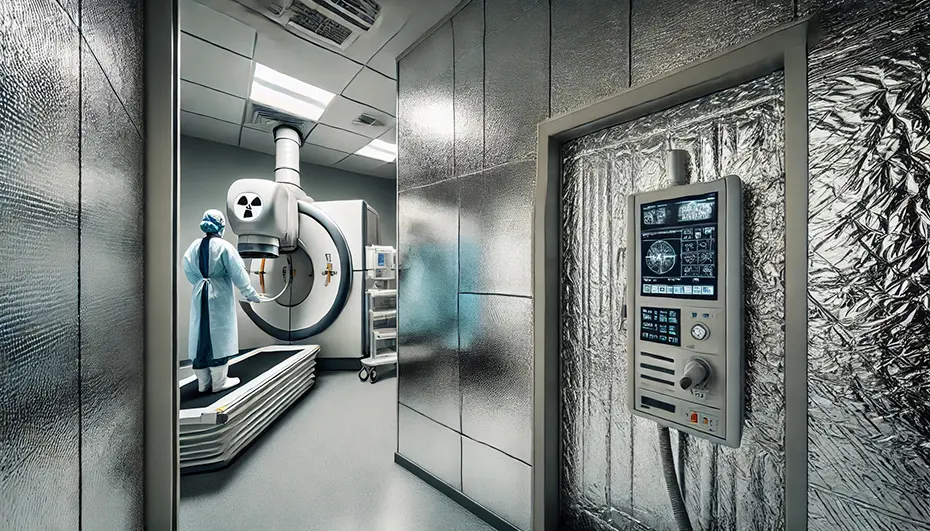
Radiation protection is a critical issue in many fields, such as medicine, industry, scientific research, and nuclear energy. Ionizing radiation, such as X-rays and gamma rays, can be harmful to health, making effective protective materials essential. One of the most important components of modern radiological protection systems is lead foil, whose unique properties make it indispensable for many specialized applications.
Why is lead effective?
Lead has been widely used in radiological protection for years due to its high density and ability to absorb radiation. Lead foil, a thin layer of this metal, combines lead’s effectiveness with flexibility and easy installation. This makes lead foils ideal for precise and varied applications.
Properties of lead foils
Lead foil has several key features that make it widely used in radiological protection:
- High density – Lead effectively absorbs radiation, making lead foil an excellent protective material. Even a thin layer provides a strong barrier.
- Flexibility – Lead foil is easy to shape, allowing it to be used on irregular surfaces and in hard-to-reach areas.
- Durability – Lead foil is resistant to external factors, making it suitable for both indoor and outdoor use.
Ease of installation – Its form makes lead foil easy to install on various surfaces, such as walls, doors, windows, and protective panels.
Applications of lead foil
1. Radiological protection in medicine
Medicine is one of the primary sectors where lead foils play a crucial role. X-ray radiation is commonly used in diagnostic imaging, but excessive exposure can be harmful to health. Therefore, it’s essential to ensure the proper protection of medical personnel and patients.
Lead foil is used in:
- Walls and ceilings of X-ray rooms – Preventing radiation from penetrating outside diagnostic rooms.
- X-ray doors – Lead foil in doors acts as a barrier, allowing for safe procedures.
- Protective screens – Mobile shields that can be placed as needed to block radiation.
- Protective accessories – Lead foil is also used to make protective aprons, gloves, and other gear that safeguard personnel from harmful radiation.
It is worth noting that the use of lead foil in medicine extends beyond diagnostic imaging. It is also used in oncology, where radiation is applied to treat cancer, and in research labs that work with radioactive materials.
2. Radiological protection in industry
The industrial sector, especially energy and chemical industries, is another area where lead foil finds extensive use. Industrial facilities often utilize devices that emit ionizing radiation, creating the need for robust protection for both workers and equipment.
Lead foil is used in:
- Protective chambers – In areas where radiation-emitting equipment is used, lead foil prevents radiation from escaping.
Machine and equipment shielding – Machines exposed to radiation can be secured with lead foil, enhancing their lifespan and safety. - Radiological insulation – Lead foil is commonly used in protective barriers that shield workers during production processes involving radiation.
3. Applications in construction
Modern construction increasingly utilizes lead foil, particularly in projects requiring radiation protection or acoustic insulation. Lead foil not only serves as an effective radiation shield but also absorbs sound, making it a frequently chosen material in contemporary buildings.
Applications include:
- Wall and ceiling insulation – In projects where noise or radiation may impact comfort and safety, lead foil provides additional protection.
- Moisture barriers – Lead foil also acts as a barrier against moisture, increasing its durability and functionality in construction projects.
Innovative technologies utilizing lead foil
In today’s fast-paced technological advancements, lead foil is increasingly being used in fields beyond the traditional applications of medicine and industry. It’s gaining popularity in advanced technologies such as electromagnetic radiation shielding, which is vital in the era of 5G networks.
- Electromagnetic radiation protection: Lead foil can be used to shield sensitive electronic devices like computers, servers, and communication systems from radio interference. With the expansion of 5G technology, the need for protecting devices from electromagnetic radiation is becoming increasingly crucial.
Sustainability and lead foil
With a growing emphasis on sustainability and eco-friendly materials, lead foil is valued for its durability and recyclability. Despite being a heavy metal, lead can be fully recycled, reducing its environmental impact. Lead foil can be reused multiple times, making it both an economical and ecological solution.
Conclusion
Lead foils are versatile and effective protective materials used across various industries. Thanks to their unique properties—high density, flexibility, and ease of installation—they are an indispensable solution for shielding against X-rays and gamma radiation. As technology rapidly advances and the demand for health and safety protection increases, lead foil remains one of the most essential materials in modern radiological protection systems.
The use of lead foil extends beyond medicine and industry. It is increasingly being utilized in construction and in protecting advanced technological devices, highlighting its universal applicability and reliability.


